A Man Who Played a Pivotal Role in Solving the Mystery of Life
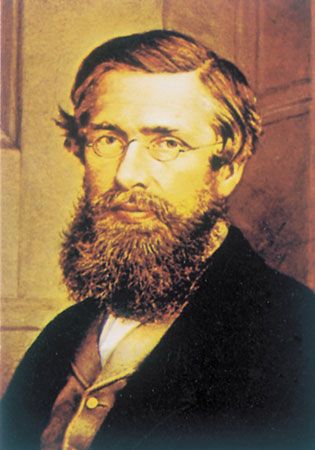 Alfred Russel Wallace(1823 – 1913) is widely acknowledged to be the co-discoverer of “The Theory of Natural Selection” with Charles Darwin in 1858. The theory of Natural Selection is often called the “The Darwin-Wallace Theory”, for which the highest honors were bestowed on Wallace by the scientific community of that time. The honors were made by the Linnean Society of London, the Royal Society of London, and the British monarch (the Order of Merit).
In the late 19th and the early decades of the 20th century, the theory of Natural Selection, as a means of the evolutionary change, lost its impetus. It was only in the mid-twentieth century that the theory of Natural Selection got revived and was accepted as the mechanism of the evolutionary change.
At the young age of 25, Wallace, along with Henry Walter Bates (an English Naturalist) decided to travel to Brazil to collect specimens of insects, birds, and other animals. On 26 April 1848, they left for Pará (Belém) from Liverpool. For A. R. Wallace, the primary aim of this expedition was two-folded, viz. to seek the evidence for evolution and to make an attempt to discover its mechanism. A few months after the beginning of the expedition, Wallace and Bates split up in order to collect specimens in different areas. Wallace focused in the middle Amazon and Rio Negro; he traveled up the Rio Negro River more than anyone else had done before. Wallace drew a map of the Rio Negro, which was published by the Royal Geographical Society of London and which became the standard map for many years.
In 1852, due to his poor health, Wallace decided to return to Britain. However, during the voyage, his ship caught fire and sank; destroying his precious notes, drawings, and much of the collections. After days of drifting in the open sea, Wallace managed to reach England. In 1854, Wallace left Britain for Malay Archipelago (group of islands in the Pacific and Indian Oceans including areas like East Malaysia, islands of Indonesia, etc.). After spending nearly eight big years in the region and undertaking sixty or seventy separate journeys, he had covered a distance of around 14,000 miles. He visited every important island in the Archipelago, and collected about 7500 shells, 8050 bird skins, 110,000 insects, and 410 mammal plus reptile specimens. Amongst these many species were entirely new to biologists and naturalists of that time.
Some of Wallace’s popular discoveries include –
Ornithoptera croesus – Wallace’s Golden Birdwing Butterfly (Bacan Island)
Semioptera wallacei – Wallace’s Standard-Wing Bird of Paradise (Bacan Island)
Trogonoptera brookiana – Rajah Brooke’s Birdwing Butterfly (Borneo)
Alfred Russel Wallace’s “The Malay Archipelago”, which is the most acknowledged of all the travel writings on the amazing regions of Malay Archipelago (such as Malaysia, Indonesia, and others), describes Wallace’s work and experiences in the most scientific yet fascinating manner. This book stands at a very high position with respect to the scientific books of the nineteenth century.“The Malay Archipelago” can truly be regarded as a “Biological Marvel” as its scientific status is of “The Landmark Importance in Biology”. In this book, Wallace gave a spectacular account of the mysterious Birds of Paradise along with other indispensable information.
Apart from Wallace’s contributions to the theory of Natural Selection, which solved the mystery of life, he also made many other significant contributions. These contributions covered fields as diverse as glaciology, anthropology, land reform, ethnography, astrobiology, and epidemiology. His pioneering work in the field of evolutionary biogeography, the study of how plants and animals are distributed, gave him the honor of being recognized as “The Father of Evolutionary Biogeography”. Alfred Russel Wallace’s dedicated explorations into the tropical regions are, even at this moment of time, of unmatchable worth.
Related Books To Read:
Evolution, Second Edition
The Origin Of Species: 150th Anniversary Edition
On the Origin of Species: The Illustrated Edition