Call Dr. Aditya Sardana Now to Get Electro-Homeopathy Treatment! – 9811121327, 9999295042, 9868593827
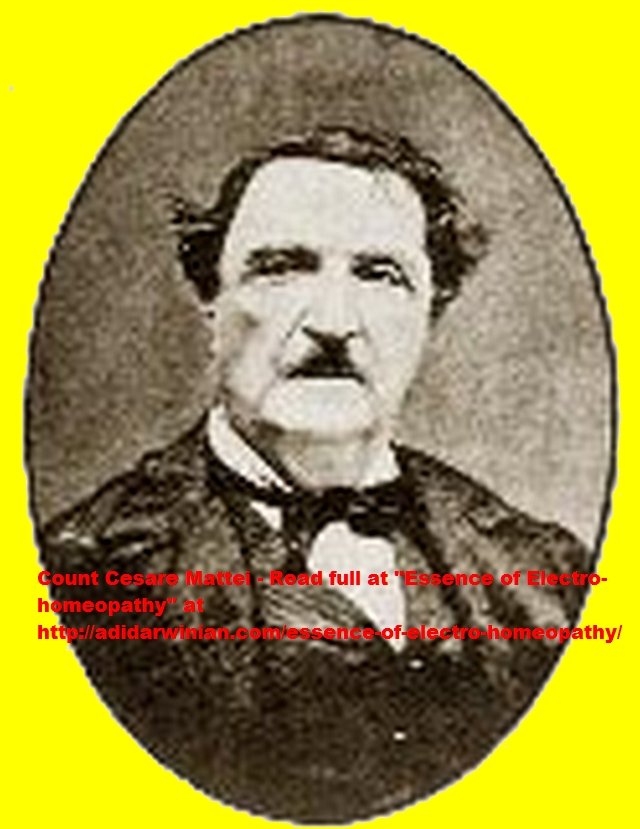
Electro-Homeopathy or Electro-Homoeopathy or Electro Homeopathy is an alternative system of medicine founded by an Italian named Count Cesar Mattei in the nineteenth century.
The term “Electro-Homeopathy” is derived from “Electro” + “Homeopathy”. The term “Electro-Homeopathy” was used by Count Cesar Mattei to describe his system of medicine because it is based on the Law of Similars and makes use of “Vegetable Electricity” contained in the medicinal plants. Electro Homeopathy or Electrohomeopathy or Electrohomoeopathy is also sometimes called Electropathy.
Advocators of Electro-Homeopathic medicine have described it as a new medical system. Dr. Count Cesar Mattei called his remedies Electro-Homeopathic on account of their instant and efficacious action just like the action of the electricity. He described Electrohomeopathy as an extension and simplification of Homeopathy developed by Dr. Samuel Hahnemann. He used the term “Perfected Homoeopathy” for Electrohomeopathy and called his Electro Homeopathic materia medica as the consummation of the Homeopathic materia medica.
According to Dr. Mattei, any abnormal change in the blood or lymph or both of these vital fluids leads to the diseased states of the human body. Count Mattei recognized four main types of constitutions or temperaments as important in the selection of the Electrohomeopathic remedies, viz., – Sanguine temperament, Bilious temperament, Lymphatic temperament, and Nervous temperament.
The Electrohomeopathic system of medicine employs combination of various medicinal plants in the preparation of a single remedy. Thus, the remedies are called complex remedies. Count Mattei asserted that complex remedies are more effective than simpler ones employed by Homeopathy because diseases are complex in nature and the complex remedies have wider range of action – Complexa Complexis Curantur. Electropathy involves the use of spagyric method of preparation of essences from medicinal plants.
Differences Between Electro-Homeopathy and Homeopathy
There are certain differences between Electro-Homeopathy and Homeopathy. Some of the notable differences are described here below –
- According to Electrohomeopathy, disease occurs due to vitiation of blood, lymph or both of these fluids, whereas Homeopathy assigns cause of disease to vitiation of vital force.
- In the preparation of the Electro-Homeopathic remedies, only the medicinal plants are employed, i.e., it is a purely plant-based system of medicine. The Homeopathic system of medicine employs medicinal plants, minerals (metals, non-metals and their compounds), animal products, imponderables, morbid tissues / products (nosodes), and healthy tissues / products (sarcodes) in the preparation of remedies.
- Homeopathy relies heavily on symptoms, unlike Electrohomeopathy that focuses on organs and organ systems.
- Electrohomeopathy gives importance to local and external application of remedies, whereas homeopathic system of medicine does not.
- Electrohomeopathy makes use of cohobation and spagyric methods of medicine preparation, unlike Homeopathy.
- Electro-Homeopathy makes use of the complex remedies as described above. In the case of the classical Homeopathic practice, the use of the single remedy is permitted at a time by its founder Dr. Samuel Hahnemann.
Call Dr. Aditya Sardana Now to Get Electro-Homeopathic Treatment! 9811121327, 9999295042, 9868593827